Written by: The Shiroumaso Team — A traditional ryokan operating in Hakuba for over 50 years
You’ve skied the slopes. You’ve soaked in the onsen. But you still have a free day — what next? Just one hour from Hakuba stands a jet-black castle over 400 years old: Matsumoto Castle. It’s one of only five castles in Japan designated as a National Treasure, and its six-story wooden keep is the oldest of its kind in the country.
Nagano Prefecture is far more than mountains and ski resorts. Ancient castles, atmospheric merchant streets, handmade soba noodles, and a 1,400-year-old Buddhist temple — all of this is within easy day-trip distance from Hakuba.
In this guide, we cover everything you need for a perfect Nagano day trip: Matsumoto Castle highlights, castle town food and shopping, Zenkoji Temple, two ready-to-use itineraries from Hakuba, and complete transport information — all from a local Hakuba perspective.
See the full Hakuba overview: Complete Hakuba Travel Guide
Matsumoto Area — National Treasure Castle & Castle Town
Matsumoto Castle — Japan’s 400-Year-Old “Crow Castle” National Treasure
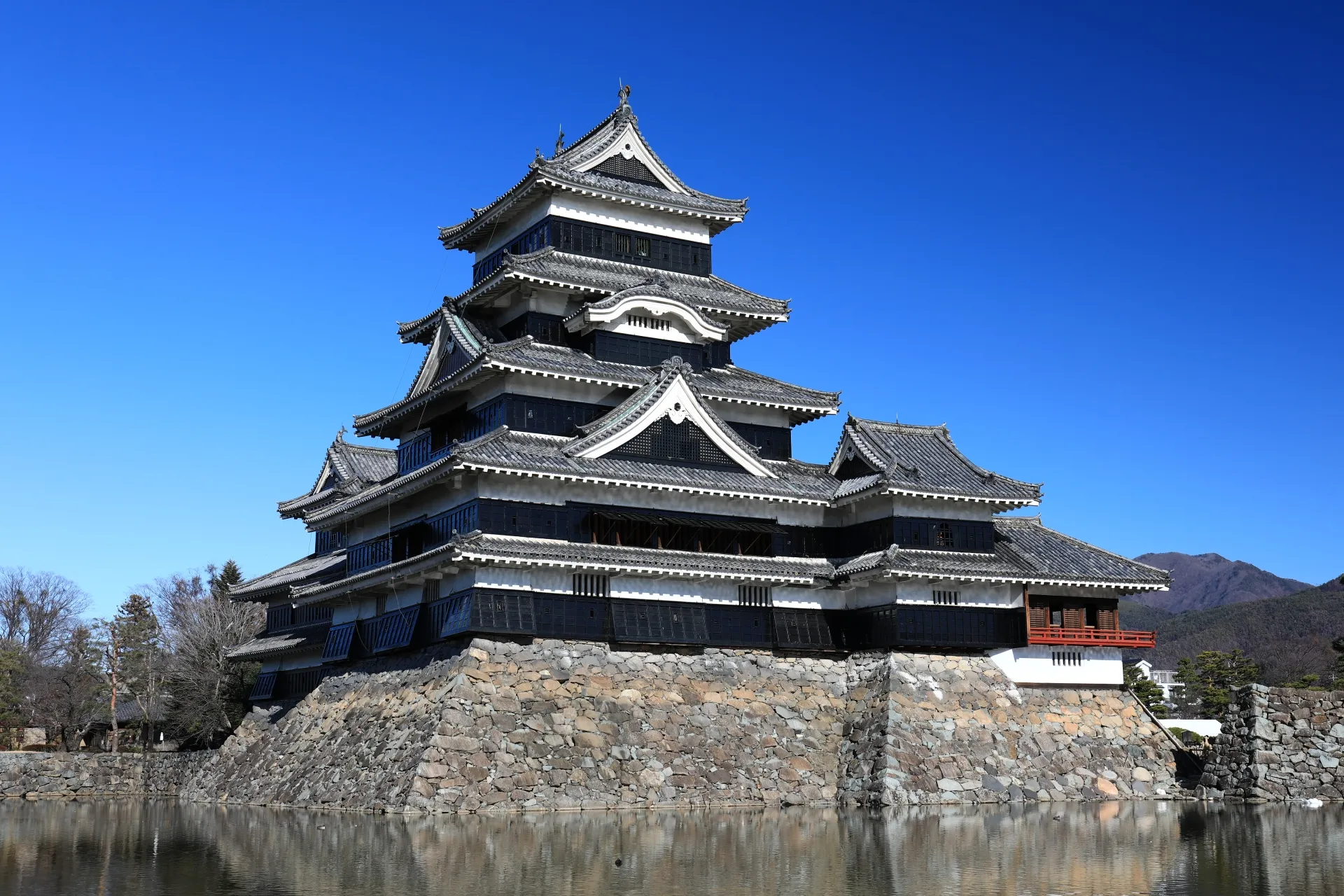
Brief History — Why It’s Called the “Crow Castle”
Matsumoto Castle was completed in 1593–1594 during Japan’s civil war era. Unlike most Japanese castles built on hilltops, it’s a “flatland castle” (hirajiro) situated on a plain. Its six-story keep (tenshu) is the oldest surviving original five-story, six-floor castle tower in Japan.
The nickname “Crow Castle” (Karasu-jo) comes from its striking black wooden walls. The contrast between the dark lacquered boards and white plaster creates a dramatic appearance — the visual opposite of Himeji’s famous “White Heron Castle.” The black finish isn’t paint but natural lacquer applied for waterproofing, which has deepened in color over four centuries.
In 1952, the Japanese government designated Matsumoto Castle a National Treasure — one of only five castles in all of Japan to receive this honor.
Best Photo Spots + When to Visit
Matsumoto Castle is photogenic from every angle, but these spots deliver the best shots:
- Red bridge on the west side (Uzumibashi) — The classic angle. The castle reflects in the moat water with the Japan Alps as a backdrop. Morning light (8:30–10:00) hits the castle face perfectly
- Honmaru Garden (inner castle grounds) — Get up close to the stone walls and tower. The cherry blossom season (early April) is spectacular
- South side along the moat — Wide-angle framing that captures the entire castle. Best for panoramic shots
Best time: Right at opening (8:30). Fewer crowds and soft morning light for photography.
Admission, Hours & Essential Info
| Item | Details |
|---|---|
| Admission (adults) | ¥1,200 (e-ticket) / ¥1,300 (walk-up) |
| Admission (elementary & junior high) | ¥400 |
| Preschool children | Free |
| Regular hours | 8:30 AM–5:00 PM (last entry 4:30 PM) |
| Golden Week (Apr 26–May 6) | 8:00 AM–6:00 PM |
| Summer extended (Aug 9–17) | 8:00 AM–6:00 PM |
| Closed | December 29–31 only |
| Time needed inside the keep | 45–60 minutes |
| Address | 4-1 Marunouchi, Matsumoto, Nagano |
| From Matsumoto Station | 20-min walk or 10-min bus (stop: Matsumoto-jo/Shiyakusho-mae) |
Tip: E-tickets are ¥100 cheaper and let you choose a time slot. During Golden Week and Obon (August), expect long queues — arrival at opening is strongly recommended.
Seasonal Events — Winter Projection Mapping
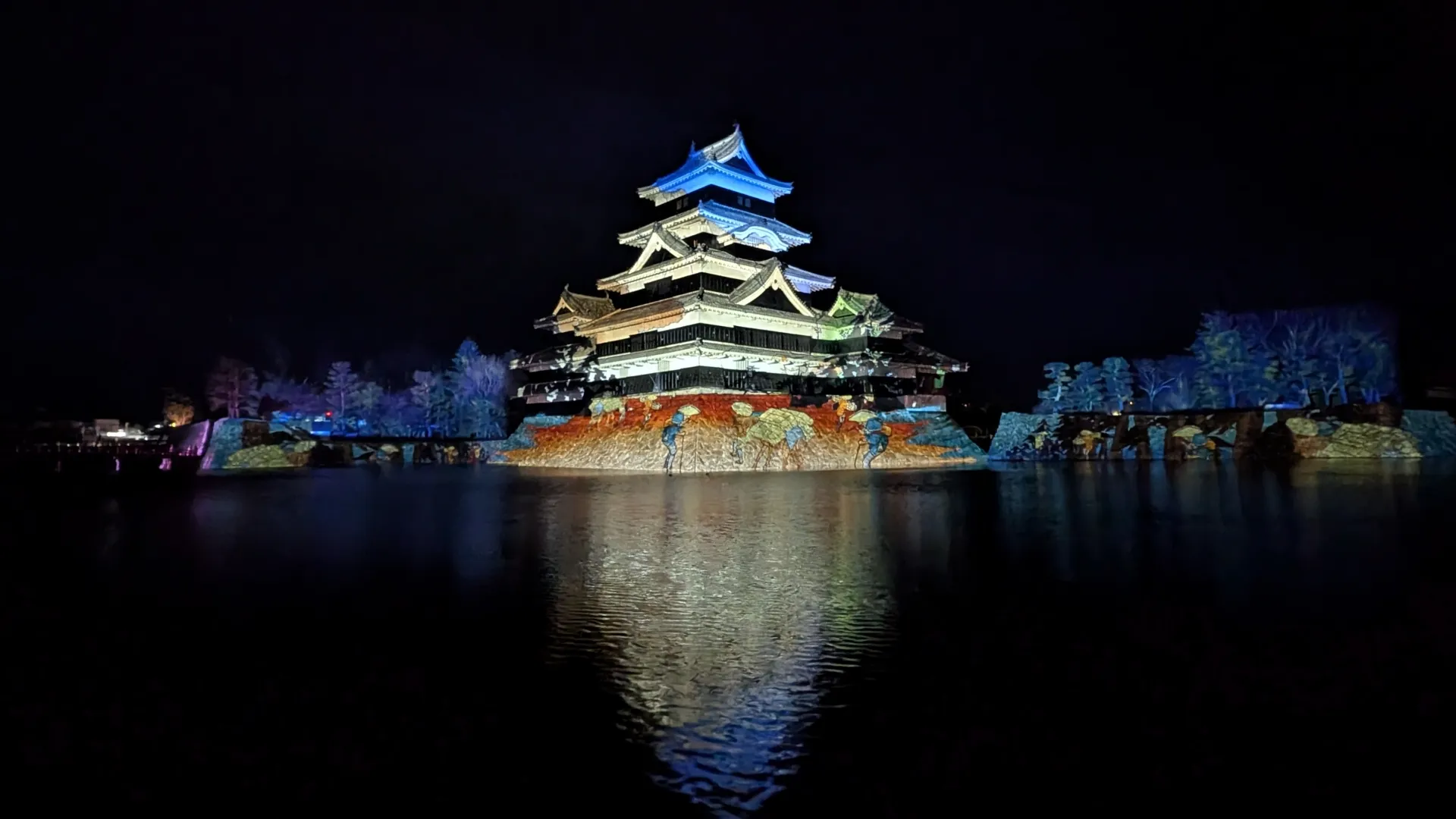
Every winter, Matsumoto Castle hosts “Matsumoto Kacchin — Light & Ice Castle Town Festival.” The black castle becomes a canvas for stunning projection mapping shows, while the surrounding streets glow with illuminations — a spectacular winter-only experience.
| Item | Details |
|---|---|
| Dates (2025–2026 season) | December 13, 2025 – February 15, 2026 |
| Projection mapping | 6:00 PM–10:00 PM (shows every ~12 minutes) |
| City illuminations | 5:00 PM–10:00 PM |
| Admission | Free |
| Venue | Matsumoto Castle Park (projections), Daimyo-cho Street & Chitose Bridge (illuminations) |
Three themed periods:
- Period 1 (Dec 13–Jan 7): “Castle Beyond Time — A Story of Light”
- Period 2 (Jan 8–28): “Memories of Light — Highlight Reel”
- Period 3 (Jan 29–Feb 15): “Light Blooms on the Castle — Prelude to Spring”
The festival also includes the Matsumoto Castle Ice Sculpture Festival, with intricate ice carvings displayed around the castle grounds. If you’re in Hakuba for winter skiing, an evening visit to the illuminated castle makes for an unforgettable experience.
Official site: Matsumoto Kacchin
Castle Town Walking — Nawate & Nakamachi Streets
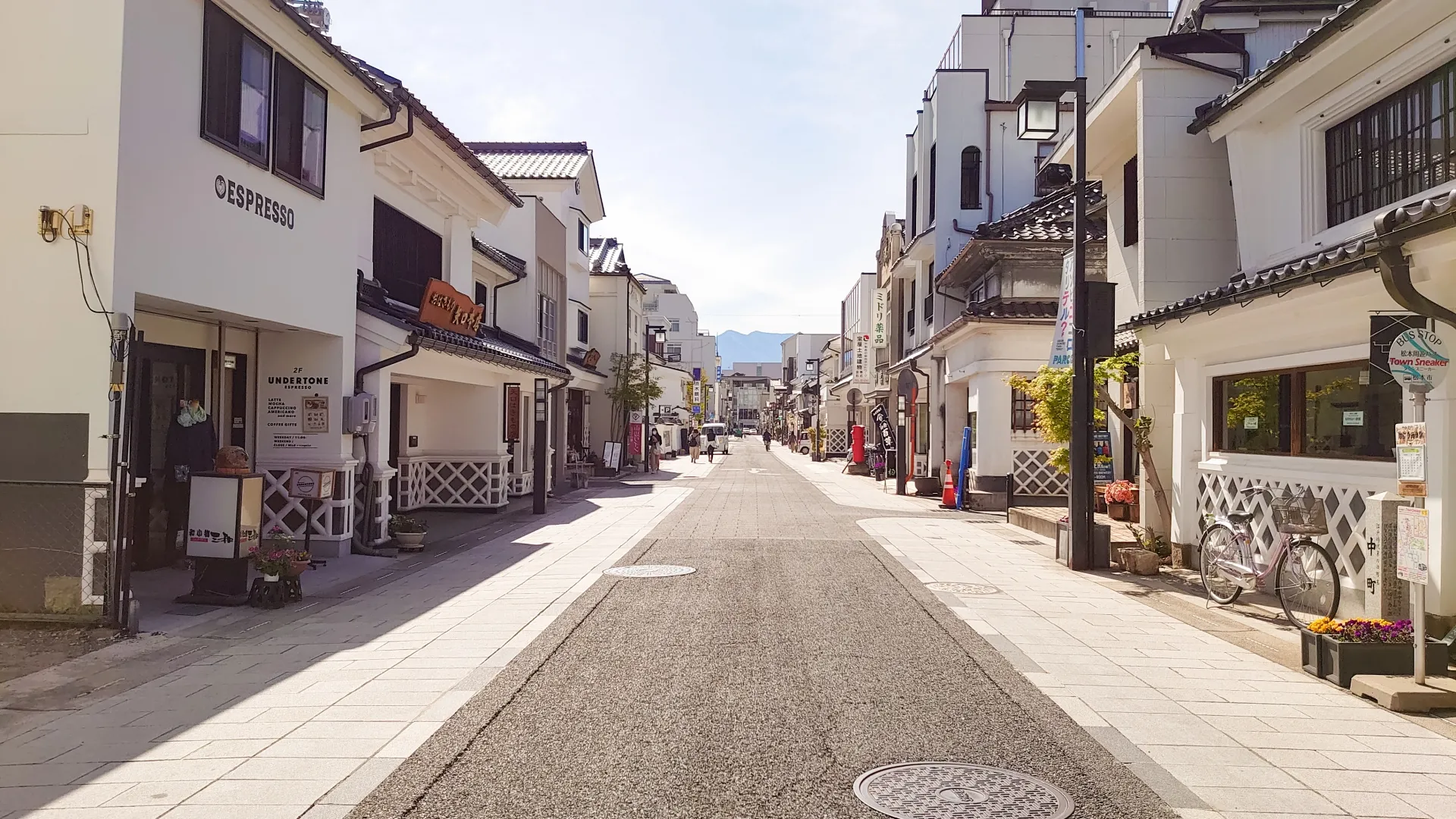
Matsumoto Castle is the headline attraction, but the real charm of this city lies in the streets surrounding it. Within a 10-minute walk from the castle, you’ll find two distinctive shopping streets and some of the best local food in Nagano.
Nawate Street (Nawate-dori) — A 300-meter pedestrian lane along the Metoba River, lined with about 50 small shops. The street is decorated with frog statues, frog merchandise, and frog-themed shops — a tribute to the Kajika frog that once inhabited the river. Don’t miss taiyaki (fish-shaped pastry with red bean paste) from a street stall.
Nakamachi Street (Nakamachi-dori) — Runs parallel to Nawate Street. Beautifully preserved kura (traditional merchant storehouses) with distinctive black-and-white plaster walls have been converted into cafés, galleries, craft shops, and restaurants. Great for Matsumoto pottery, lacquerware, and local souvenirs.
Must-Try Matsumoto Food — Soba, Oyaki & Soft Cream
Matsumoto is famous for its soba noodles, made with pure water from the Japan Alps. Combined with oyaki (stuffed buns) — a Nagano specialty — the food alone justifies the trip.
Recommended Soba Restaurants
| Restaurant | Price Range | Highlight |
|---|---|---|
| Nomugi (野麦) | ¥1,000–¥2,000 | Delicate thin noodles. Expect a queue |
| Miyota (みよ田) | ¥1,000–¥3,000 | Year-round “toji soba” (dipped in hot broth). Open daily |
| Ogiso Seifunjo (小木曽製粉所) | Under ¥1,000 | Self-service, budget-friendly. Connected to Matsumoto Station |
Recommended Oyaki Shops
| Shop | Popular Fillings | Highlight |
|---|---|---|
| Kohirudo (小昼堂) | Potato cheese, pork-miso | Near the castle. Creative oyaki |
| Oyaki Takamine (おやき高峯) | Cream cheese miso, salted butter apple | Innovative flavors. On Nakamachi Street |
Other local specialties:
- Sanzoku-yaki (山賊焼き) — Matsumoto’s signature dish: a massive deep-fried chicken cutlet marinated in garlic soy sauce
- Basashi (馬刺し) — Raw horse meat sashimi, a Nagano delicacy. Shinmiyoshi (新三よし) serves a famous 6-variety platter
- Soft cream — Wasabi, miso, or red bean flavors at shops along Nawate and Nakamachi streets
Important note: Many small soba and oyaki shops accept cash only. Bring Japanese yen.
Nagano Area — Zenkoji Temple & Snow Monkeys
Zenkoji Temple — A 1,400-Year-Old Buddhist Temple in Nagano
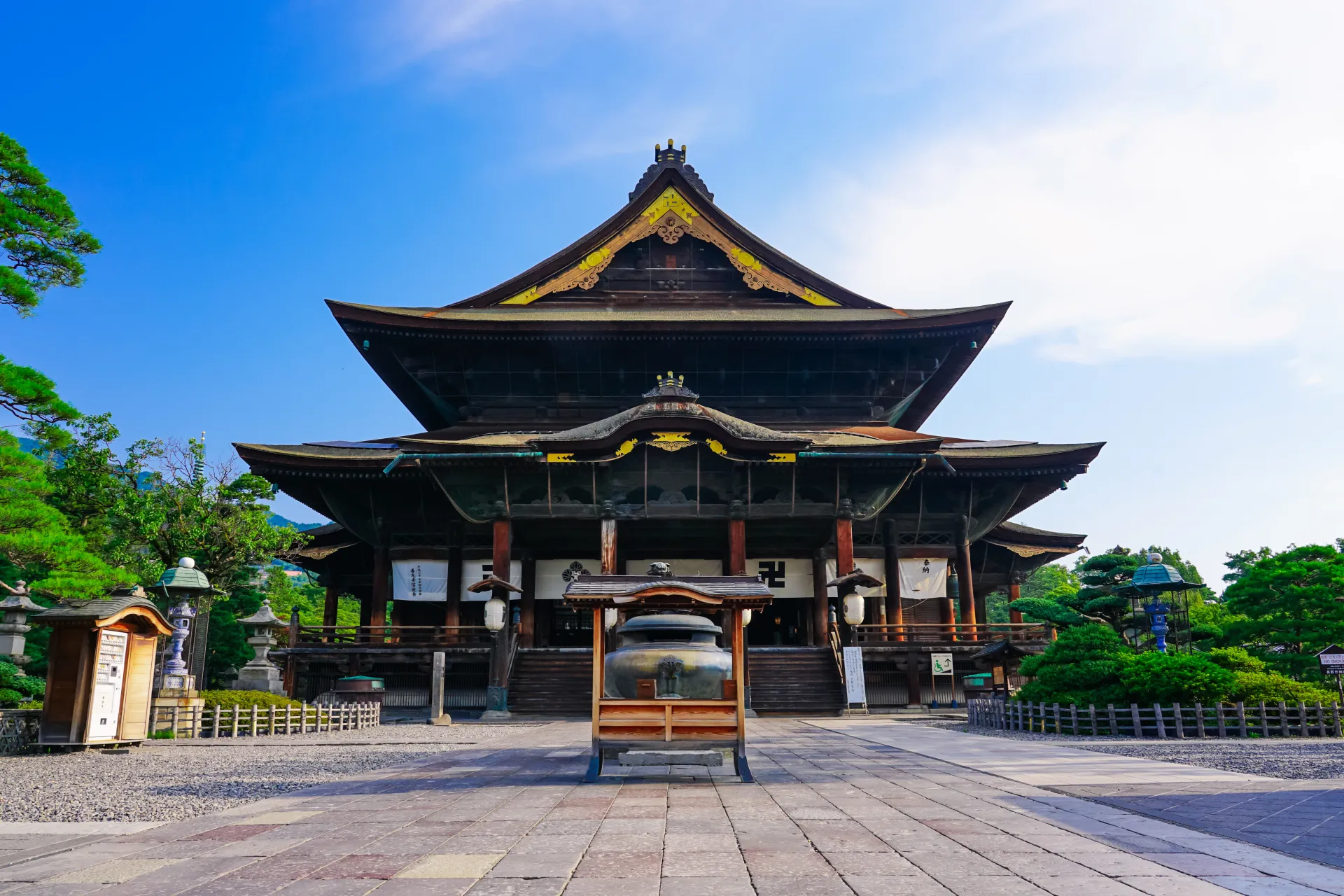
Zenkoji Temple in Nagano City is one of Japan’s oldest and most important Buddhist temples, founded in the 7th century (around 642 AD). It houses what is believed to be the first Buddhist statue ever brought to Japan — making it a pilgrimage site of profound significance. Approximately 6 million visitors come each year.
The temple holds a grand ceremony called Gokaicho once every seven years, during which a replica of the hidden main statue is displayed. The next Gokaicho is scheduled for April–June 2027.
Must-See Highlights + The Pitch-Dark Underground Tunnel
Okaidan Meguri — Zenkoji’s most unique experience. You descend into a tunnel beneath the main hall that is completely, absolutely dark — not a single ray of light. Your goal is to feel along the wall and find the “Key to Paradise” (Gokuraku no Jomon). According to belief, touching this key guarantees rebirth in the Pure Land.
Sanmon Gate — The imposing 20-meter main gate, built in 1750. Climb to the second floor for panoramic views over Nagano City (separate admission).
Kyozo — A scripture hall containing a massive rotating library (rinzo). One full rotation is said to grant the same merit as reading every sutra inside.
| Item | Details |
|---|---|
| Combo ticket (inner hall + tunnel + gate + kyozo + museum) | ¥1,200 |
| Inner hall + tunnel (includes museum) | ¥600 |
| Sanmon Gate | ¥600 |
| Kyozo | ¥300 |
| Gate, Kyozo & museum hours | 9:00 AM–4:00 PM |
| Main hall closing (summer: Apr–Oct) | 4:30 PM |
| Main hall closing (winter: Dec–Feb) | 4:00 PM |
| From Nagano Station | Bus ~15 min + 5-min walk (total ~20 min) / 30–40-min walk |
Official site: Zenkoji Temple
Nakamise Street — Shopping + Traditional Japanese Sweets
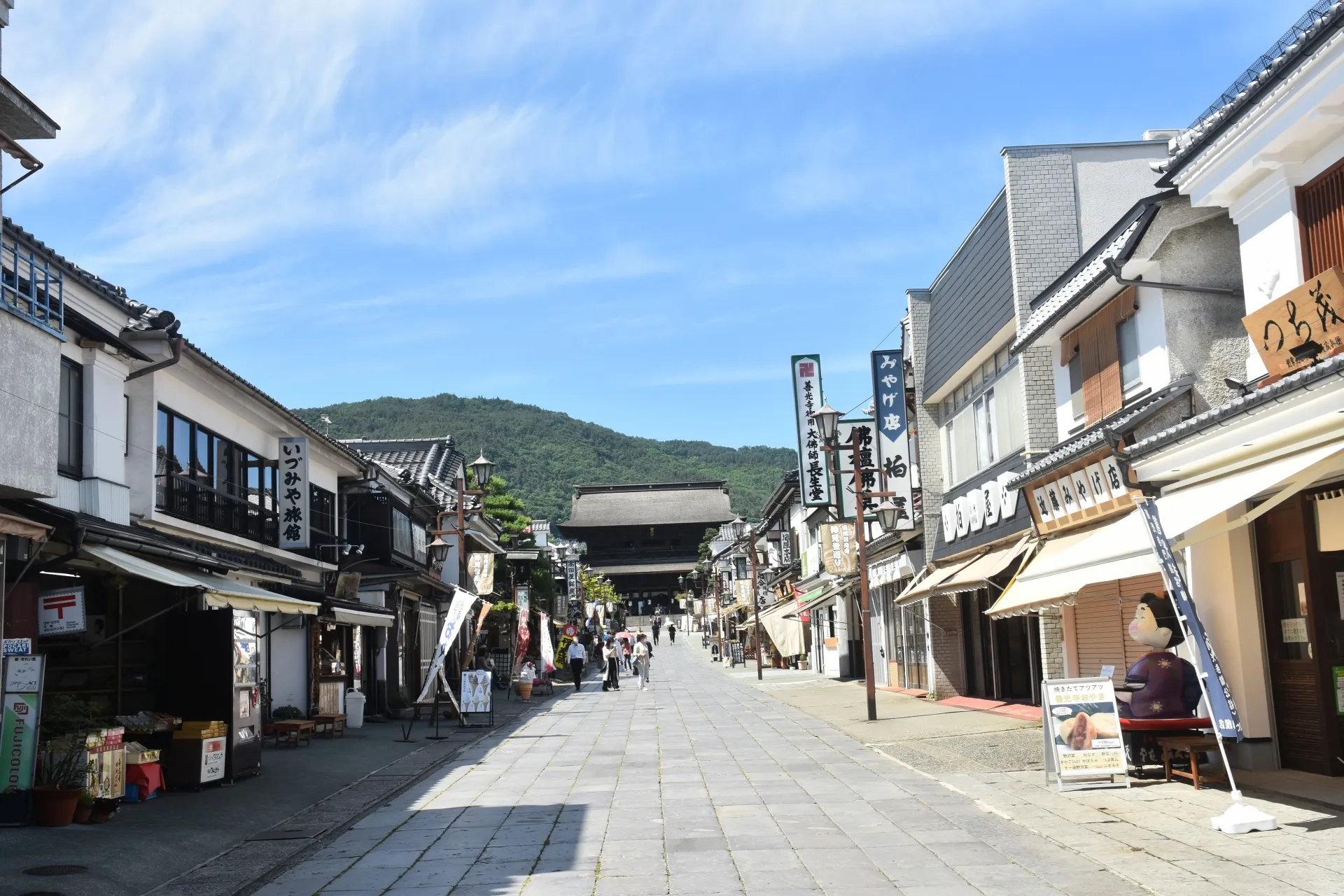
Nakamise Street stretches from the temple gate to the main hall, lined with over 50 shops. Most open around 8:00–9:00 AM and close by 5:00–6:00 PM.
Must-visit shops:
- Yawataya Isogoro (八幡屋礒五郎) — Established in 1736. One of Japan’s top three shichimi (seven-spice blend) makers. Perfect souvenir
- Irohado (いろは堂) — Oyaki with buckwheat-flour dough. Chewy and delicious
- Zenkoji Pudding (善光寺ぷりん) — Smooth, creamy pudding. A modern Zenkoji specialty
- Sugi Yohoen (杉養蜂園) — Honey soft-serve ice cream. A sweet finish to your visit
Jigokudani Monkey Park — The World’s Only Snow Monkeys
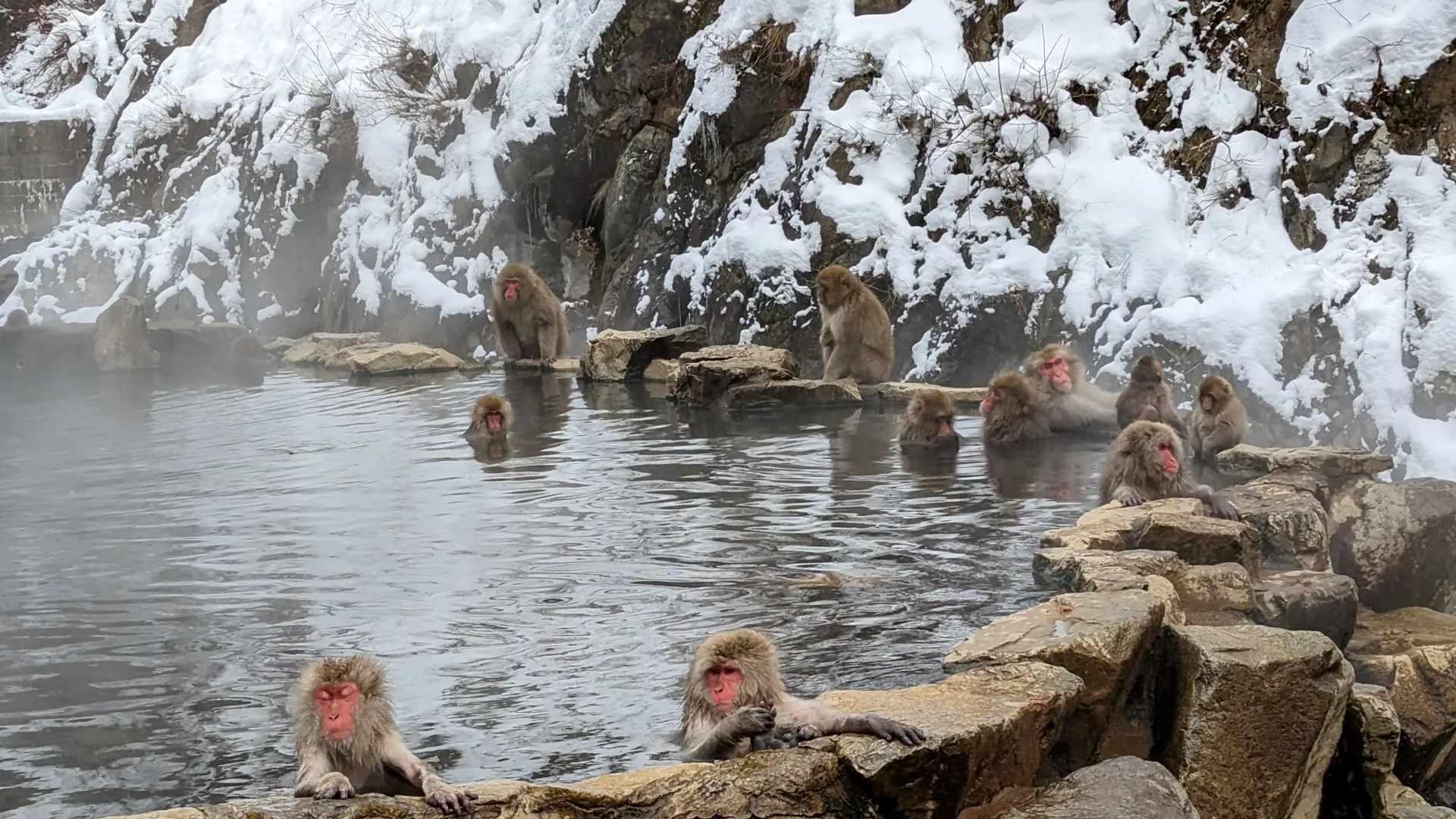
Jigokudani Monkey Park is the only place in the world where wild Japanese macaques bathe in natural hot springs. The sight of monkeys soaking contentedly in steaming water surrounded by snow has become one of Japan’s most iconic images.
| Item | Details |
|---|---|
| Admission (adults 18+) | ¥800 |
| Admission (children, elementary–high school) | ¥400 |
| Children under 6 | Free (with guardian) |
| Hours (summer: Apr–Oct) | 8:30 AM–5:00 PM |
| Hours (winter: Nov–Mar) | 9:00 AM–4:00 PM (last entry 3:45 PM) |
| Closed | Open year-round, no holidays |
| Address | Yamanouchi, Shimotakai District, Nagano |
Getting there from Hakuba:
- Hakuba → Nagano (Alpico bus, 70 min) → Nagaden bus Shiga Kogen line, get off at “Snow Monkey Park” (~40 min) → 35-min walk (1.6 km). Total: 2.5–3 hours
Best season: December–March. January–February right after fresh snowfall is peak — the monkeys bathe most frequently during this period.
Important tips:
- From the bus stop, you must walk 1.6 km on a mountain trail (30–35 minutes). In winter, the path can be icy and slippery — waterproof, non-slip shoes are essential
- Do not feed, touch, or stare at the monkeys — they are wild animals
- Winter temperatures can drop below -10°C (14°F) — warm layers, gloves, and a hat are necessary
- A Jigokudani visit from Hakuba takes most of the day due to travel time. Plan it as a separate day trip rather than combining with Route A or B
Official site: Jigokudani Monkey Park
Getting There — Transport from Hakuba
First, if you haven't planned your trip from Tokyo to Hakuba yet, check our Tokyo to Hakuba access guide.
Hakuba → Matsumoto (Train)
| Line | Time | Fare |
|---|---|---|
| JR Oito Line (local) | 1 hr 40 min–2 hrs | ¥1,170 |
| Limited Express Azusa | ~1 hr | ¥2,190 |
Tip: The Limited Express Azusa has limited departures — check the timetable in advance. The JR Oito Line runs approximately once every 1–2 hours.
From Matsumoto Station to the castle: 20-minute walk or 10-minute bus (stop: Matsumoto-jo/Shiyakusho-mae).
Hakuba → Nagano (Bus)
| Operator | Time | Fare | Notes |
|---|---|---|---|
| Alpico Traffic | 70–80 min | ¥2,400 | Year-round, 10 departures/day |
Tip: The Hakuba-Nagano Toll Road has been toll-free since February 2025, keeping bus travel times consistent.
Matsumoto → Nagano (Train)
For Route B, connecting from Matsumoto to Nagano.
| Line | Time | Fare |
|---|---|---|
| Limited Express Shinano | ~50 min | ¥2,370 |
| JR Shinonoi Line (local) | ~1 hr 10 min | ¥1,170 |
Day Trip Itineraries from Hakuba — 2 Recommended Routes
Here are two proven day-trip itineraries from Hakuba, based on our team’s actual experience.
Route A: Hakuba → Matsumoto (Half Day)
Perfect if you have half a day or want to focus on Matsumoto only. Travel by train.
| Time | Place | Activity | Duration |
|---|---|---|---|
| 7:30 AM | Hakuba | Depart by JR Oito Line | — |
| 9:10 AM | Matsumoto Station | Arrive, 20-min walk to castle | — |
| 9:30 AM | Matsumoto Castle | Castle tour + garden + photos | 1.5 hrs |
| 11:00 AM | Nawate + Nakamachi Streets | Walking, shopping | 1 hr |
| 12:00 PM | Soba or oyaki shop | Lunch | 1 hr |
| 1:00 PM | Matsumoto Station | Depart by JR Oito Line | — |
| 2:40 PM | Hakuba | Arrive. Onsen time | — |
Tip: Using the Limited Express Azusa cuts travel time to ~1 hour each way, letting you depart at 8:00 AM instead.
Route B: Hakuba → Matsumoto → Nagano (Full Day)
The ultimate one-day Nagano experience: castle + castle town + temple.
| Time | Place | Activity | Duration |
|---|---|---|---|
| 7:00 AM | Hakuba | Depart by JR Oito Line | — |
| 8:40 AM | Matsumoto Station | Arrive, 20-min walk to castle | — |
| 9:00 AM | Matsumoto Castle | Castle tour (arrive at opening) | 1.5 hrs |
| 10:30 AM | Nawate + Nakamachi | Walking, shopping | 45 min |
| 11:15 AM | Matsumoto soba shop | Lunch | 45 min |
| 12:00 PM | Matsumoto → Nagano | JR Limited Express Shinano | 50 min |
| 1:00 PM | Zenkoji Temple | Temple visit + tunnel + gate | 1.5 hrs |
| 2:30 PM | Nakamise Street | Shopping + sweets | 45 min |
| 3:15 PM | Nagano → Hakuba | Alpico express bus (70 min) | — |
| 4:30 PM | Hakuba | Arrive | — |
Route B tip: Take JR outbound (Hakuba → Matsumoto → Nagano) and return by Alpico express bus (Nagano → Hakuba, 70 min, ¥2,400). This is the most efficient combination.
FAQ — Common Questions About Visiting Nagano
What are Matsumoto Castle’s opening hours?
Daily 8:30 AM–5:00 PM (last entry 4:30 PM). Extended to 8:00 AM–6:00 PM during Golden Week (late April–early May) and Obon (mid-August). Closed only December 29–31.
How long does it take to get from Hakuba to Matsumoto Castle?
By JR Oito Line: 1 hr 40 min–2 hrs. By Limited Express Azusa: ~1 hour.
How many days do I need for Nagano?
One full day is enough for Matsumoto Castle + Zenkoji Temple (Route B). Add Jigokudani Monkey Park, and two days is ideal.
Where is Nagano? How far from Tokyo?
Nagano Prefecture is in central Japan, surrounded by the Japan Alps. From Tokyo (Shinjuku), it’s ~2.5 hours to Matsumoto by Limited Express Azusa.
When is the best time to visit Nagano?
Depends on what you want:
- Winter (Dec–Mar): Skiing + Snow Monkeys + Matsumoto Castle in snow
- Spring (Apr–May): Cherry blossoms + castle
- Autumn (Oct–Nov): Stunning fall foliage + castle photography
How cold is Matsumoto in winter?
December–February: daytime 0–5°C (32–41°F), nighttime -5 to -10°C (23–14°F). Warm layers, waterproof gloves, and non-slip shoes are essential.
Related Articles
Stay at a Traditional Ryokan in Hakuba
Shiroumaso has been welcoming guests for over 50 years. Enjoy kaiseki cuisine made with local ingredients, private onsen with natural hot spring water, and staff experienced in hosting international guests. Conveniently located near Happo-one ski resort.
Check Availability & Book →Last updated: March 2026 | Prices and schedules are subject to change. Please check official websites for the latest information before traveling.