Written by: The Shiroumaso Team — a ryokan operating for over 50 years in Hakuba
Hakuba sits at 700 meters above sea level in the Japanese Alps, and its weather is nothing like Tokyo, Osaka, or Bangkok. Winters drop to -15°C with meters of snowfall; summers stay cool at 20–28°C when the rest of Japan swelters in 35°C+ heat.
If you pack the wrong clothes, you’ll be miserable. If you visit in the wrong month, you’ll miss what you came for.
This guide gives you the exact temperatures for every month, tells you what to wear in each season, and helps you pick the best time to visit — whether you’re coming for powder snow, cherry blossoms, or autumn foliage. All data comes from Japan Meteorological Agency records and our own 50+ years of living in Hakuba.
New to Hakuba? Read our Complete Hakuba Travel Guide first for an overview of the village, access, and what to do.
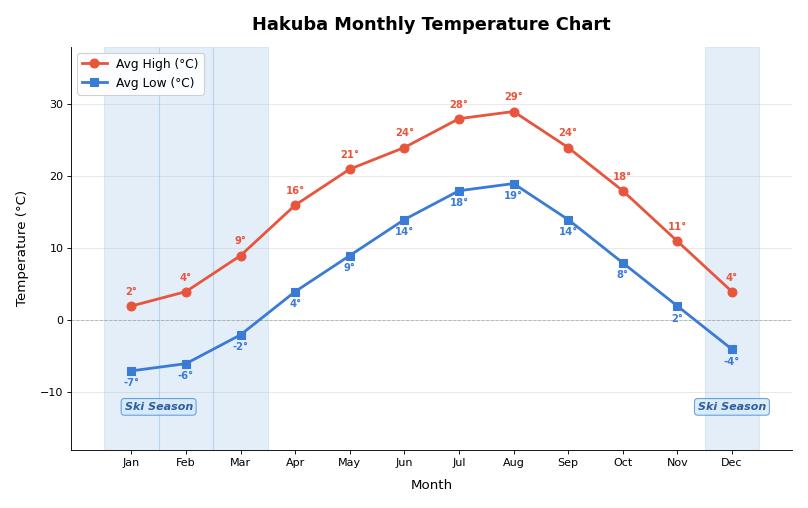
Hakuba Temperatures Year-Round — 12-Month Climate Table
This table shows average temperatures for Hakuba based on Japan Meteorological Agency data (Hakuba observation station, 703m elevation). These are 30-year normals, so individual years may vary.
| Month | Avg. High (°C) | Avg. Low (°C) | Precipitation (mm) | Snow Depth (cm) | Season |
|---|---|---|---|---|---|
| January | 2.5 | -6.8 | 138 | 100–150 | Peak Winter |
| February | 3.4 | -7.3 | 108 | 120–170 | Peak Winter |
| March | 8.2 | -3.5 | 107 | 80–130 | Late Winter |
| April | 15.8 | 2.3 | 83 | 0–30 | Spring |
| May | 21.3 | 8.4 | 95 | 0 | Spring |
| June | 24.3 | 14.0 | 152 | 0 | Rainy Season |
| July | 27.8 | 18.5 | 196 | 0 | Summer |
| August | 28.6 | 18.8 | 139 | 0 | Summer |
| September | 23.9 | 14.3 | 167 | 0 | Early Autumn |
| October | 17.6 | 6.8 | 127 | 0 | Autumn |
| November | 11.1 | 0.5 | 102 | 0–20 | Late Autumn |
| December | 4.9 | -4.4 | 122 | 40–80 | Early Winter |
Bangkok vs. Hakuba — Temperature Comparison
If you’re coming from a tropical climate, the temperature gap will shock you. Here’s a direct comparison:
| Month | Bangkok High (°C) | Hakuba High (°C) | Difference |
|---|---|---|---|
| January | 32 | 2.5 | -29.5°C |
| April | 35 | 15.8 | -19.2°C |
| July | 33 | 27.8 | -5.2°C |
| October | 32 | 17.6 | -14.4°C |
Key takeaway: In January, Hakuba is nearly 30°C colder than Bangkok. If you’ve never experienced sub-zero weather, read the clothing guide below carefully — your Bangkok wardrobe will not be enough.
Hakuba’s Four Seasons — What Each Season Is Like
Winter (December – March) — Deep Snow & World-Class Skiing
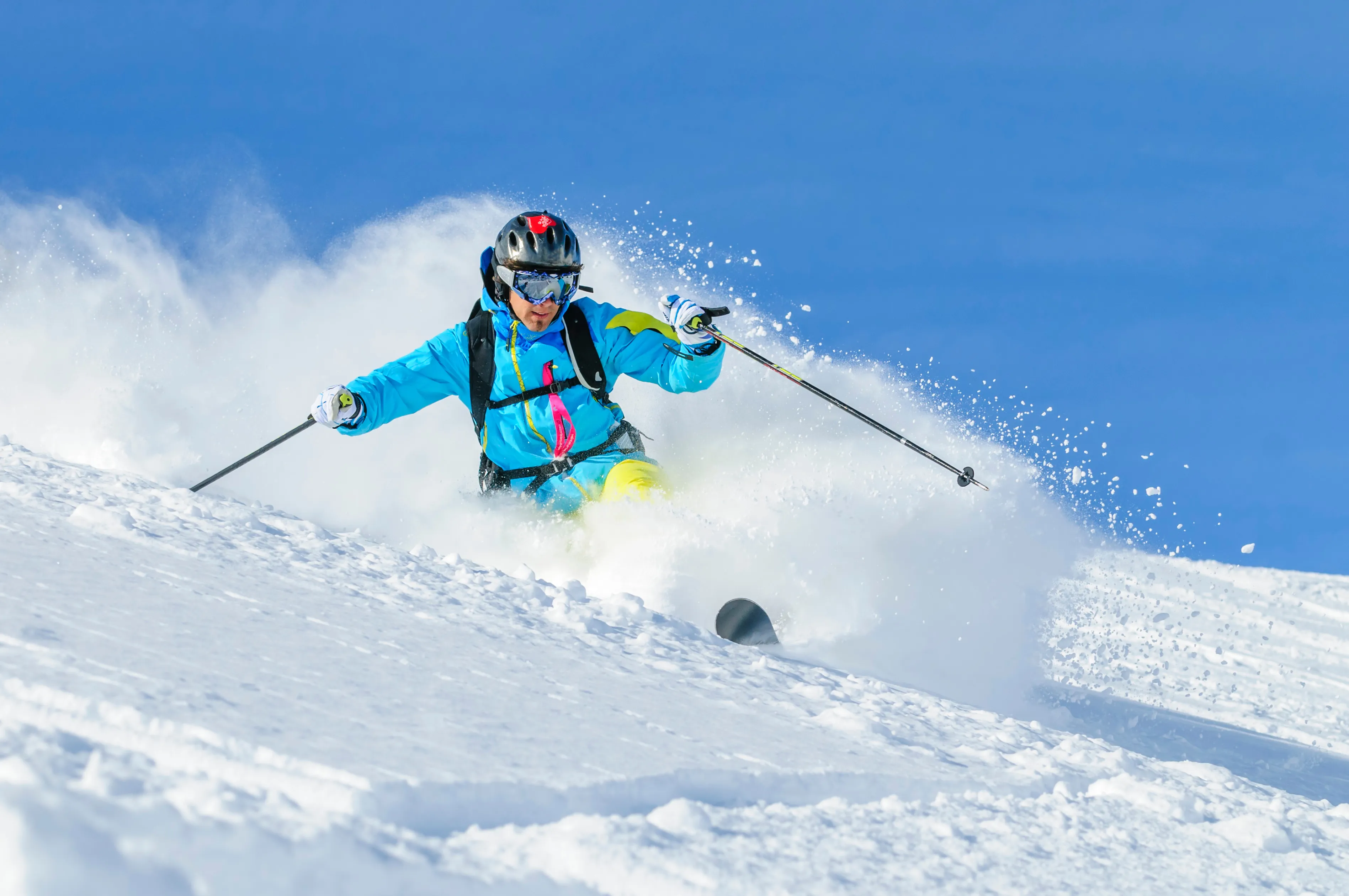
Hakuba’s winters are legendary. The village receives 8–11 meters of cumulative snowfall each season, with base depths regularly exceeding 1.5 meters at mid-mountain. This is the season that put Hakuba on the map — it hosted the 1998 Winter Olympics.
- Temperatures: Daytime highs of 2–5°C, nighttime lows of -7 to -15°C
- Snowfall: Heaviest in January and February; late November brings the first significant snow
- Ski season: Most resorts open mid-December, close late March to early May (depending on snow)
- Best powder days: January and February, especially after overnight snowfalls of 30–50cm
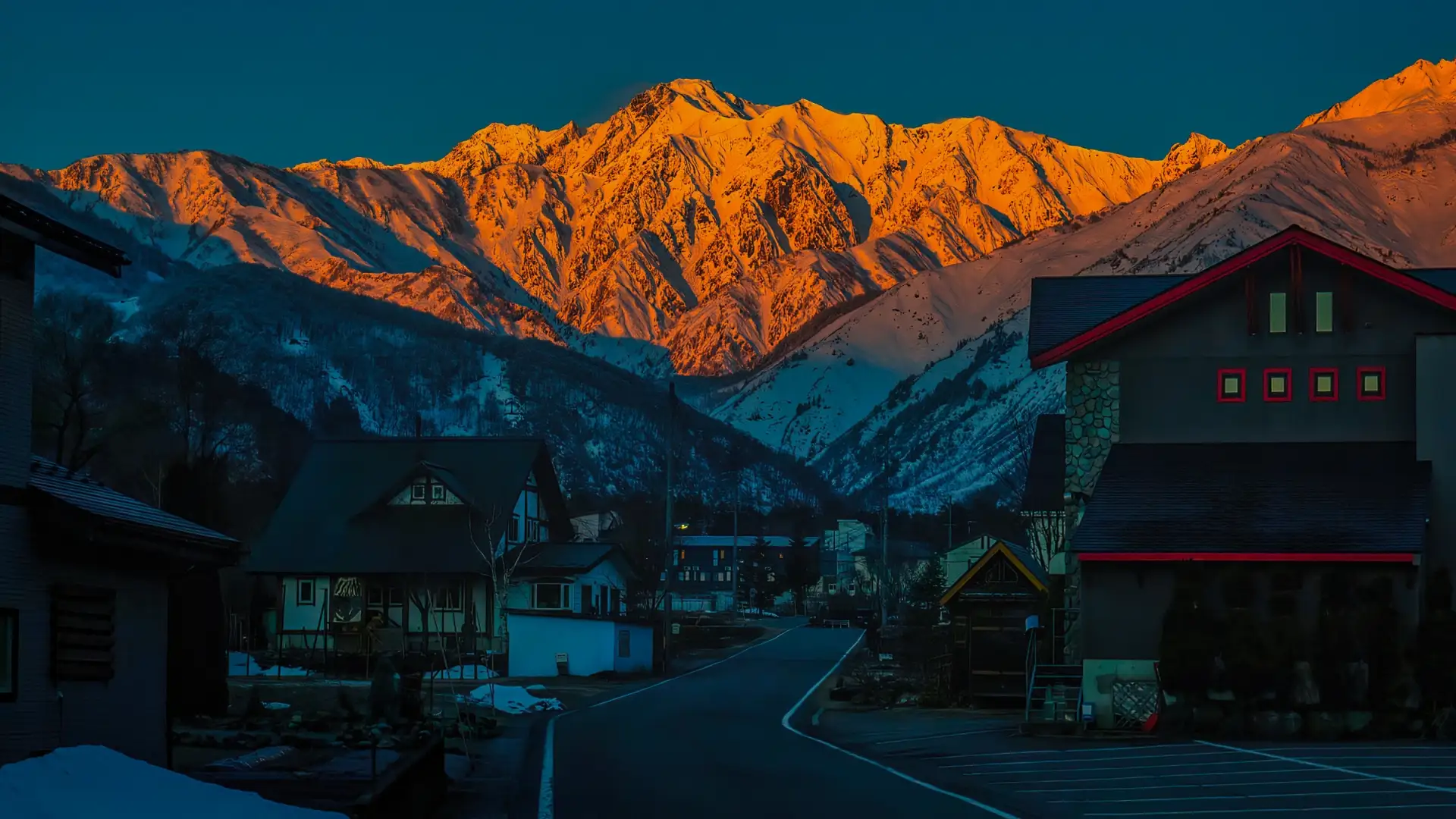
Hakuba has 10 ski resorts within a 15-minute drive, each with different characteristics. See our Hakuba Ski Resort Guide for a complete comparison.
Spring (April – May) — Cherry Blossoms & Remaining Snow
Spring arrives late in Hakuba compared to Tokyo (where cherry blossoms bloom in late March). Expect:
- Cherry blossoms: Mid to late April in the village; early May at higher elevations
- Temperatures: April 2–16°C, May 8–21°C
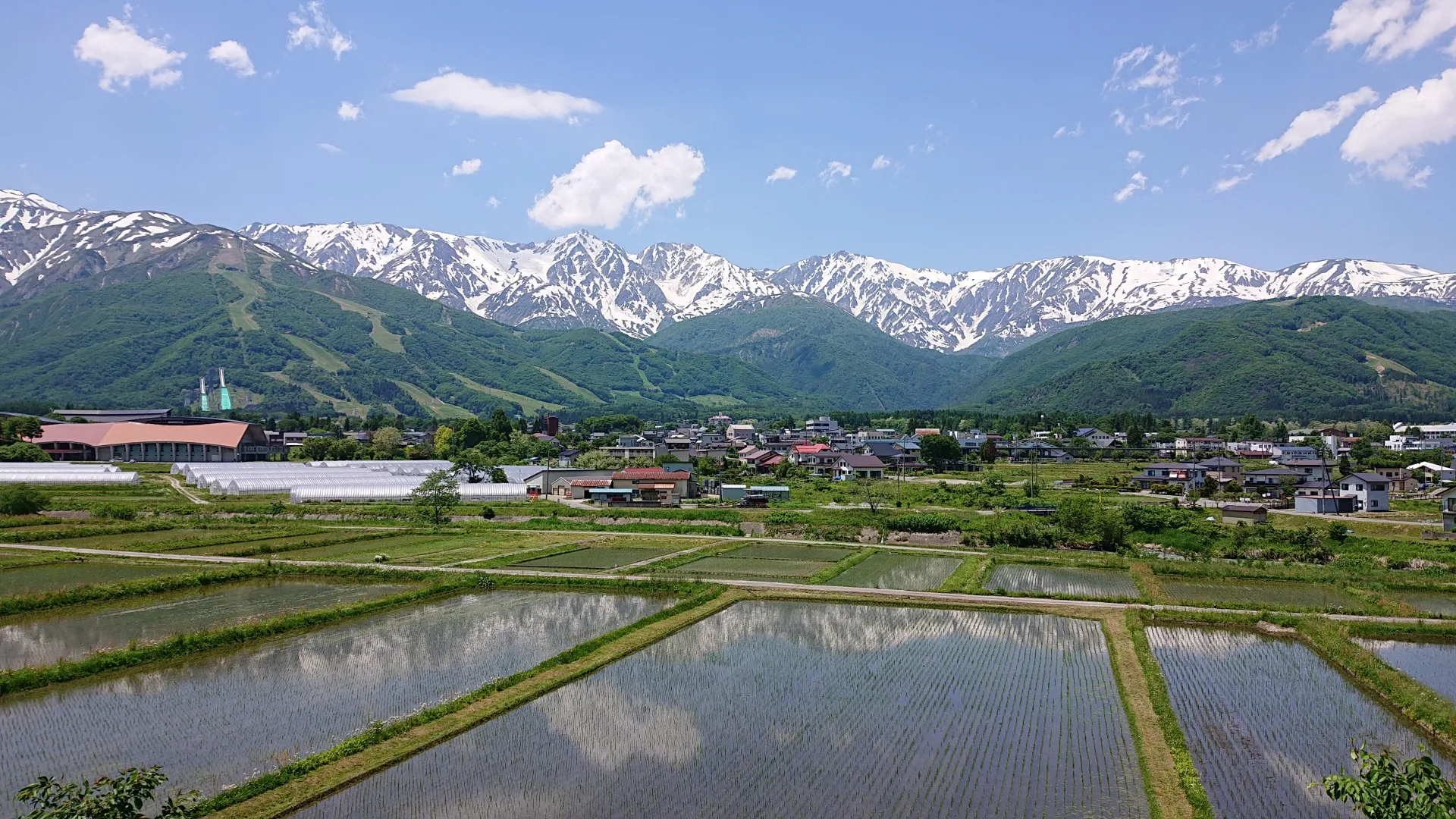
- Unique feature: You can see cherry blossoms with snow-capped mountains in the background — a view impossible in most of Japan
- Spring skiing: Happo-One and Tsugaike stay open into May; warmer temperatures mean softer snow and T-shirt skiing on sunny days
Best cherry blossom spots in Hakuba:
- Oide Park (large park with river views)
- Along the Matsukawa River walking path
- Hakuba Village roads (lined with cherry trees)
Summer (June – September) — Cool Mountain Escape
While Tokyo and Osaka suffocate in 35°C heat and crushing humidity, Hakuba stays pleasantly cool:
- Temperatures: Daytime 20–28°C, nighttime 14–19°C
- Rainy season (Tsuyu): Mid-June to mid-July; expect rain on 40–50% of days
- Best summer months: Late July and August (warm but comfortable)
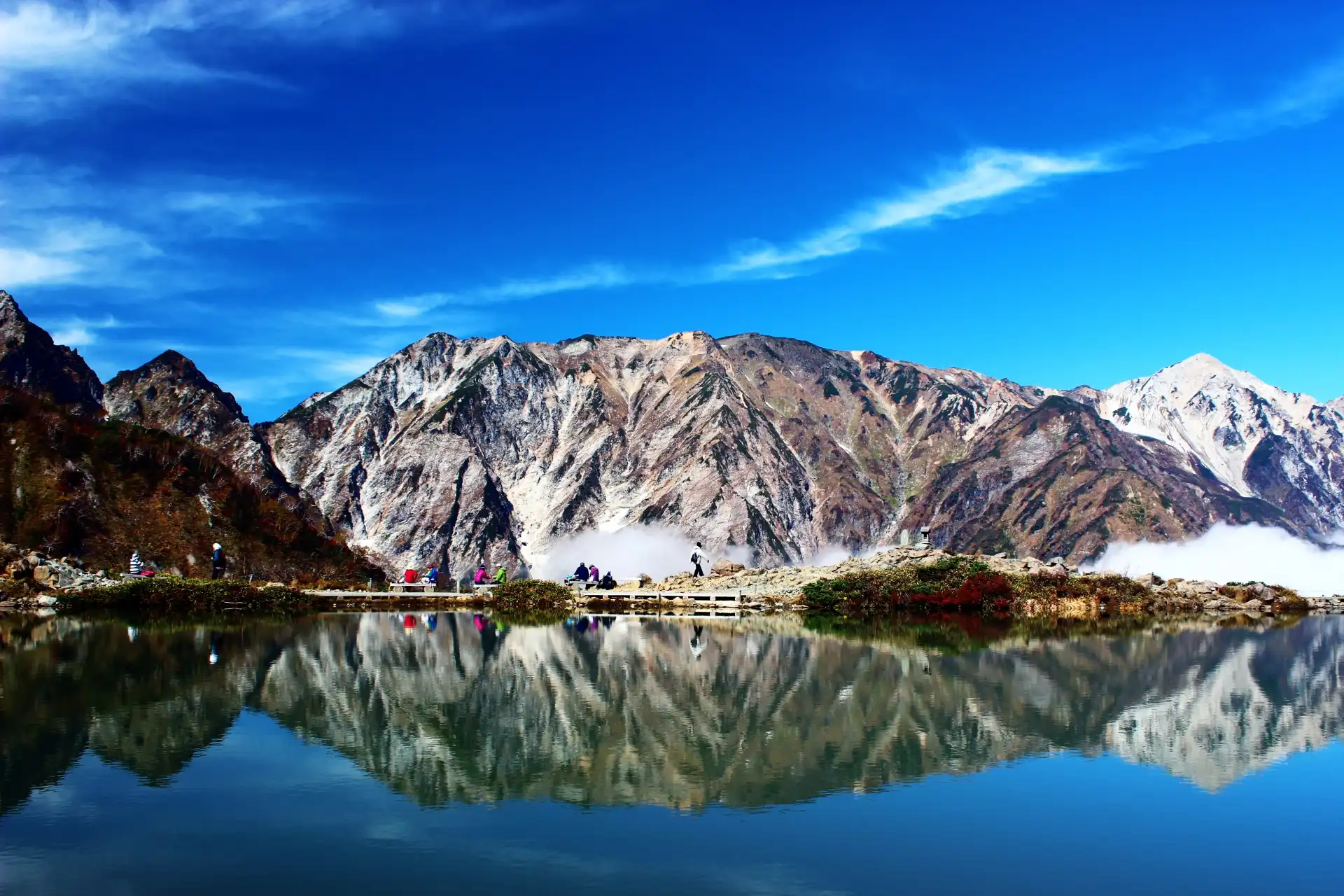
Summer activities:
- Hiking (Happo-One, Shirouma Daisekkei, Tsugaike Nature Trail)
- Mountain biking at Iwatake — see our Iwatake Mountain Resort Guide
- River rafting on the Himekawa
- Paragliding
- Camping and glamping
Autumn (October – November) — Sandan Koyo & Stunning Foliage
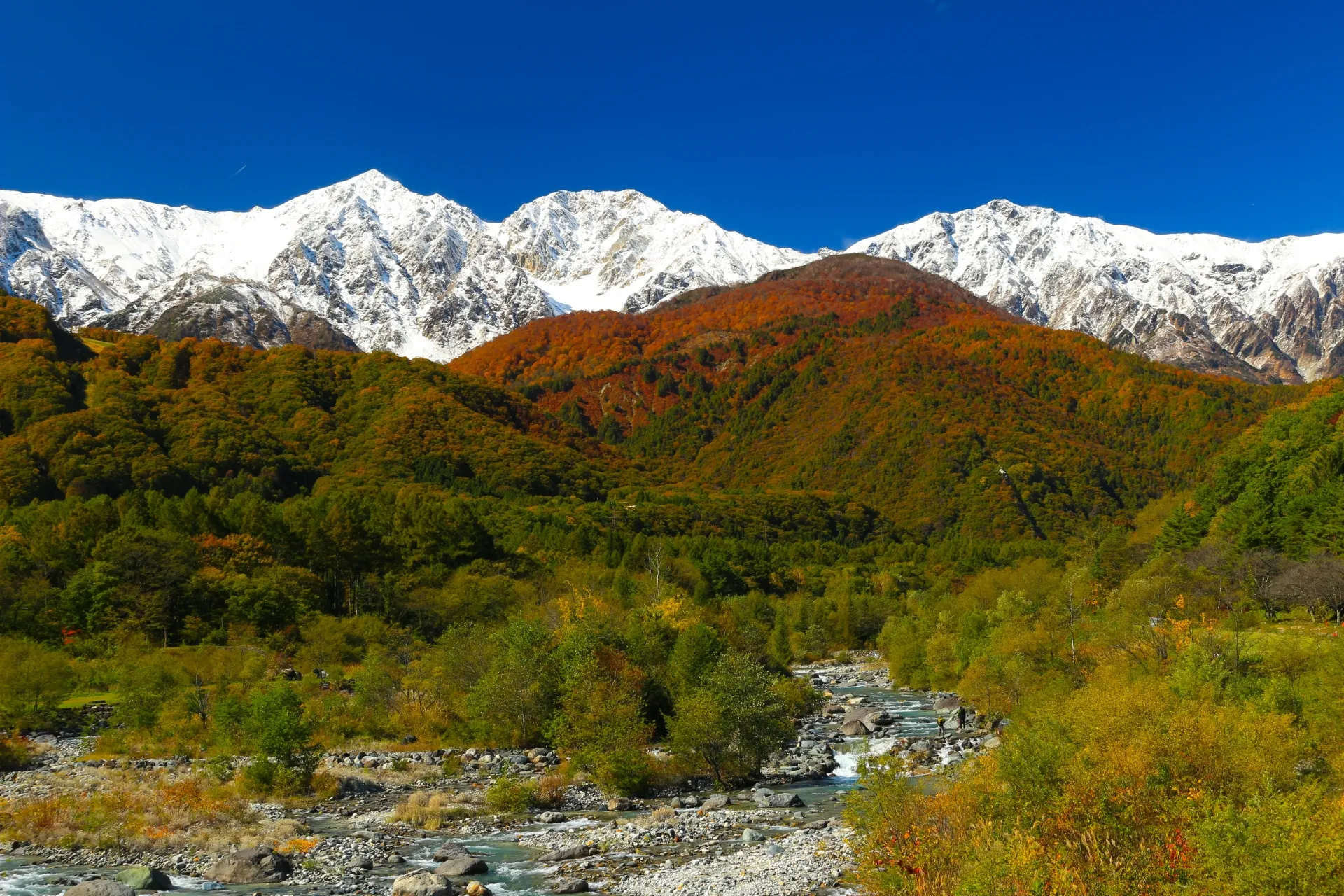
Hakuba’s autumn foliage is spectacular because of a phenomenon called Sandan Koyo (Three-Layer Autumn Colors): snow on the peaks, red/orange foliage at mid-mountain, and green trees at the base — all visible simultaneously.
- Peak foliage: Mid-October to early November (varies by elevation)
- Temperatures: October 7–18°C, November 1–11°C
- First snow on peaks: Usually late October
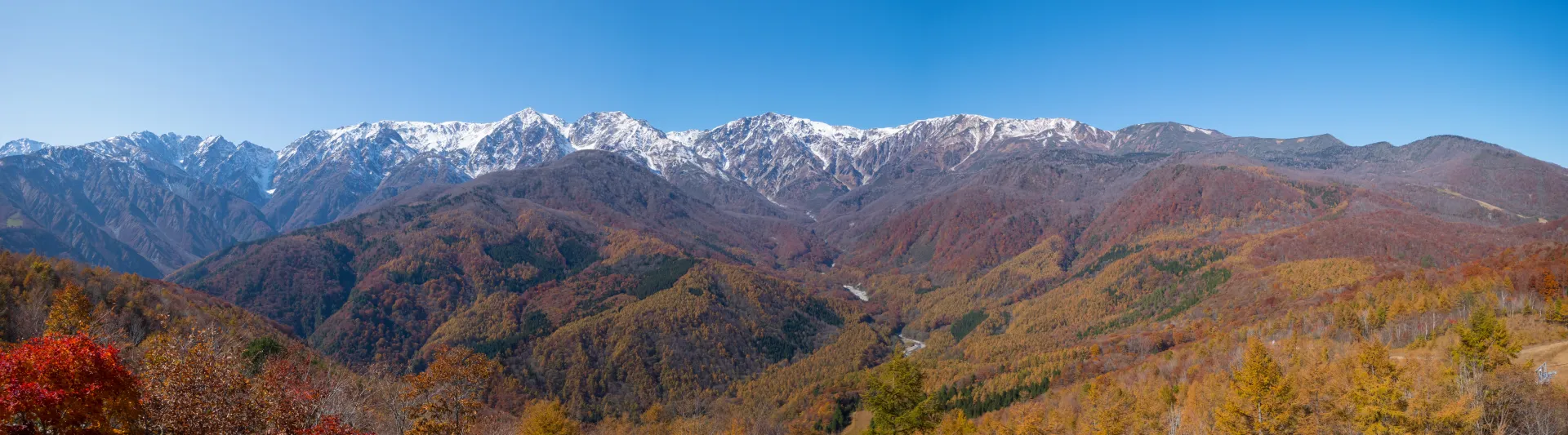
For detailed foliage forecasts and the best viewing spots, see our Hakuba Autumn Foliage Guide.
What to Wear in Hakuba — Seasonal Clothing Guide
Winter Clothing (December – March)
This is where most visitors get it wrong. Hakuba winter is significantly colder than Tokyo winter, and it’s a completely different world from tropical climates.
Layering system (recommended):
- Base layer: Thermal underwear (merino wool or synthetic — Uniqlo HEATTECH works well)
- Mid layer: Fleece jacket or down vest
- Outer layer: Waterproof, windproof jacket (ski jacket or Gore-Tex)
- Legs: Thermal tights under waterproof pants or ski pants
- Feet: Wool socks + waterproof insulated boots (NOT sneakers — you will slip on ice)
- Accessories: Warm hat, gloves (waterproof), neck gaiter or scarf, hand warmers (kairo)
Can I buy/rent winter clothing in Hakuba?
- Buy: Kojitsu Sanso (outdoor gear), Montbell (Japanese outdoor brand), Patagonia Outlet — all in or near Hakuba
- Rent: Most ski rental shops offer full ski/snowboard gear including jackets, pants, gloves, and goggles
- Budget option: Uniqlo HEATTECH base layers (buy in Tokyo before coming to Hakuba)
Spring & Autumn Clothing (April – May, October – November)
These transitional seasons have the biggest temperature swings — it can be 18°C at noon and 2°C after sunset.
- Light down jacket or fleece (essential for mornings and evenings)
- Long pants (no shorts)
- Layers you can add/remove throughout the day
- Closed-toe shoes with good grip (trails can be wet)
- Rain jacket (especially in April and November)
Summer Clothing (June – September)
Daytime is comfortable in light clothing, but evenings cool down noticeably.
- T-shirts and shorts during the day
- Light jacket or hoodie for evenings (temperatures drop to 14–19°C)
- Rain gear (especially during Tsuyu rainy season in June–July)
- Hiking shoes if you plan to hike (sneakers are fine for village walking)
- Sunscreen and hat (UV is strong at altitude)
Check Hakuba Weather in Real Time
Before you pack, check the latest forecast. These are the most accurate sources for Hakuba weather:
| Source | Best For | URL |
|---|---|---|
| Japan Meteorological Agency (JMA) | Official forecast, most accurate | jma.go.jp |
| Windy.com | Visual wind/snow maps, 10-day forecast | windy.com |
| Snow-Forecast.com | Ski resort snow reports | snow-forecast.com |
| Hakuba Valley Official | Live webcams, current conditions | hakubavalley.com |
Must-download apps:
- Windy (iOS/Android) — best visual weather app for mountain areas
- tenki.jp (iOS/Android) — Japan’s most popular weather app, hour-by-hour forecasts
- Yukiyama (iOS/Android) — ski-specific app with real-time snow depth and trail status
Hakuba Weather FAQ
How cold does Hakuba get?
The average low in February is -7.3°C, but on the coldest days, temperatures can drop to -15°C or even -20°C. Wind chill on the ski slopes can make it feel even colder. Always dress in layers and carry hand warmers.
What is the best month to ski in Hakuba?
January and February offer the best powder snow, with the deepest base and most consistent snowfalls. December is good for early season, and March offers spring skiing with warmer temperatures. See our Hakuba Ski Resort Guide for details.
When does it snow in Hakuba?
Snow begins in late November and falls heaviest from December through March. The village typically has snow cover from mid-December to mid-March. Ski resorts at higher elevations hold snow longer, sometimes into May.
What is Hakuba like in summer?
Pleasantly cool at 20–28°C — a welcome escape from the 35°C+ heat in Tokyo and Osaka. The rainy season (Tsuyu) runs from mid-June to mid-July. Late July through September is the best time for hiking, mountain biking, and outdoor activities.
Can I buy winter clothing in Hakuba?
Yes. Kojitsu Sanso, Montbell, and Patagonia Outlet are all in or near Hakuba. You can also rent full ski gear (jacket, pants, gloves, goggles) from ski rental shops in the village. For budget base layers, buy Uniqlo HEATTECH in Tokyo before heading to Hakuba.
Related Articles
Planning a trip to Hakuba?
Shiroumaso is a ryokan with over 50 years of history in Hakuba. pH 11 alkaline private onsen, kaiseki cuisine with local ingredients, and a 2-minute walk from Happo-One ski resort.
Book Your Stay at Shiroumaso →Last updated: March 2026 | Weather data is based on Japan Meteorological Agency 30-year normals. Actual conditions may vary. Always check the latest forecast before traveling.